

Reimagining Inclusion at Work
Exploring the Lives of Employees with Intellectual and Developmental Disabilities
The full inclusion of Persons with Intellectual and Developmental Disabilities (PwIDDs) in the workplace is more than a question of accessibility or organizational best practices,
it is a matter of civil rights.
***
Willing Observers and Diversity Simplified led a five-month ethnographic research project to study the inclusion of PwIDDs in the workplace. They partnered with Mann, a non-profit whose mission is to improve the employability and livability of people with IDD in India.
They asked: How is the full inclusion of PwIDDs in the workplace and in society possible? What would workplaces look like if we treated the full participation of PwIDDs not as an option, but as a matter of equal participation and civil rights?
To include PwIDDs in the workplace, we have to do more than create accessibility.
We have to change our culture.
Friday, October 23, 2026
10:00am - 12:00pm IST

Wednesday, October 28, 2026
10:00am-12:00pm PT / 1:00-3:00 pm ET

The workplace is a neurotypical space.
Mainstream Employment is generally based on neurotypical beliefs, values, and norms that guide expectations for individual and organizational behaviors including:
Expectations around communication, which place value on verbal speech, direct communication styles, making eye contact, and other nonverbal gestures common.
Establishing norms that prioritize speed and high output as a measure of productivity.
Expectations that individuals conform to environments with high amounts of sensory stimuli, such as sights, sounds, and smells.

Disability stereotypes are too common.
And many individuals falsely believe some disability stereotypes:
That disability is a deficiency.
That some disabilities are easier to accommodate.
That PwIDDs are “warm but incompetent.”
That PwIDDs are defined by their disability alone…
But the data shows otherwise.
Methods
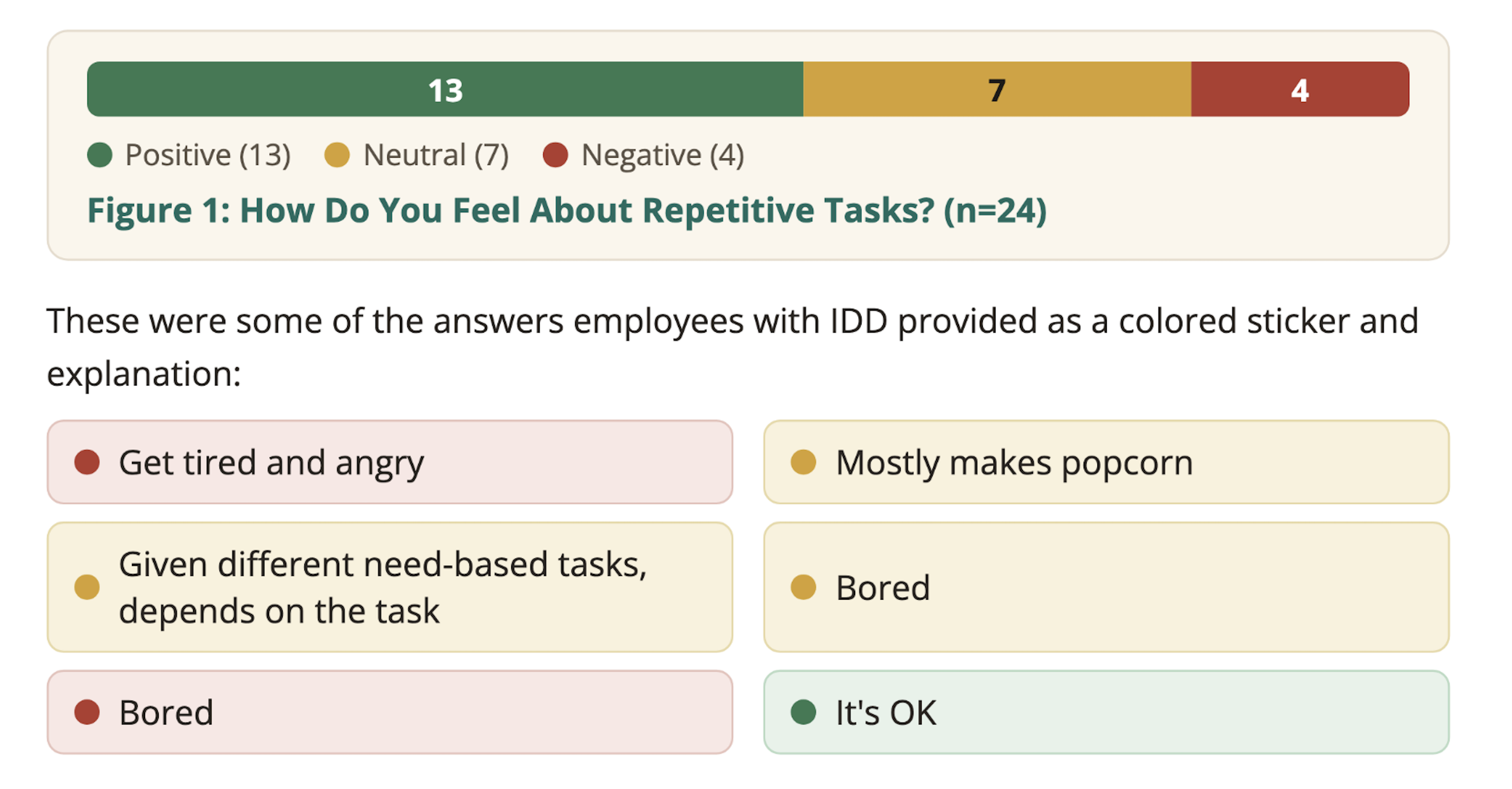
This study centered employees with IDD, using insights gained about their perspectives, interests, and inclusion and support needs to frame an analysis of their ecosystem: caregivers, managers, coworkers, job coaches, and NGO support staff. Data collection occurred among all major stakeholder groups in the following ways:
24 employees with IDD participated in 3 focus groups
14 job coaches participated in 3 focus groups
11 caregivers participated in 2 focus groups
57 caregivers submitted survey responses
14 employment site observations
20 managers participated in an interview
21 coworkers participated in an interview
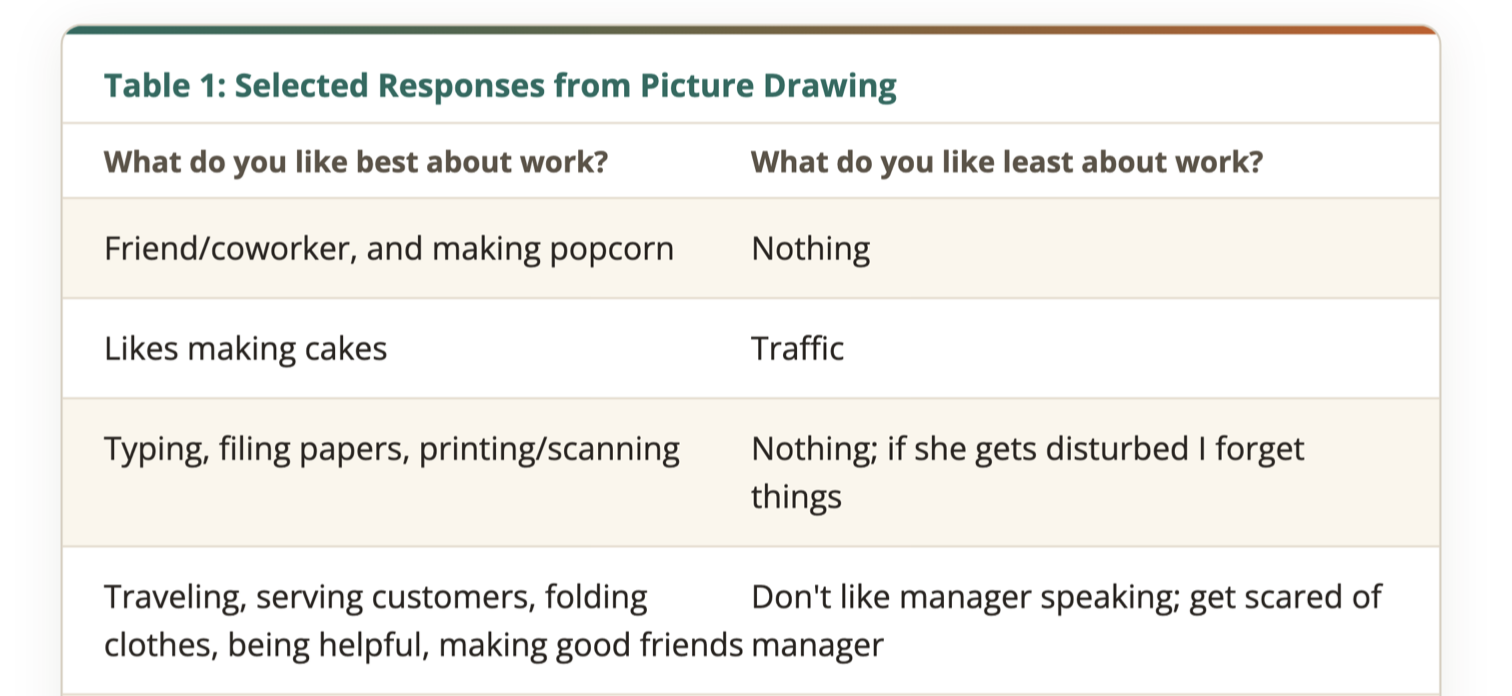
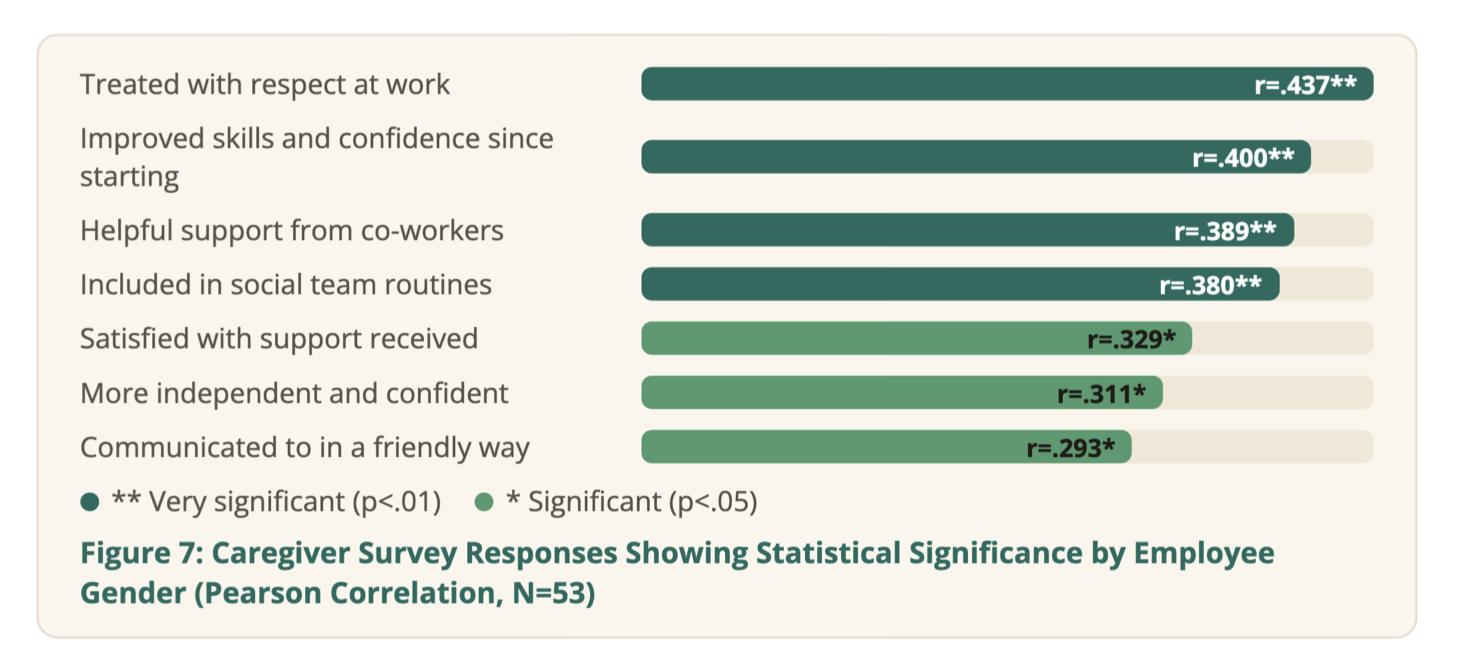
How can we create less biased, more inclusive cultures for PwIDDS and everyone?
Register for our full virtual launch to learn more.
Everyone is welcome.
Register to attend to receive the executive summary. After the launch, you’ll obtain access to the full report and supplementary content.
The full report includes:
Over 30 pages of data and data insights, and over 70 pages total.
Five major data-driven recommendations.
Four principles for disability inclusion and for conducting research on and with PwIDDs.
A thorough explanation of what we mean by culture and our methodology.
Our analysis on what kind of culture is needed to be more inclusive to PwIDD and all employees.